
SENS Announcement | 3 November 2015
RIGHTS OFFER DECLARATION ANNOUNCEMENT AND REVISED DATES AND TIMES
ADvTECH Limited
(Incorporated in the Republic of South Africa)
(Registration number 1990/001119/06)
Share Code: ADH
ISIN: ZAE000031035
("ADvTECH" or the "Company")
NOT FOR PUBLICATION, DISTRIBUTION OR RELEASE, DIRECTLY OR INDIRECTLY, IN OR INTO THE UNITED STATES, AUSTRALIA, CANADA, JAPAN OR ANY OTHER JURISDICTION IN RESPECT OF WHICH THE PUBLICATION, DISTRIBUTION OR RELEASE, DIRECTLY OR INDIRECTLY, OF THIS ANNOUNCEMENT WOULD CONSTITUTE A VIOLATION OF THE RELEVANT LAWS OF SUCH JURISDICTION OR IN RESPECT OF WHICH THE OFFERING CONTEMPLATED BY THIS ANNOUNCEMENT IS UNLAWFUL. THIS ANNOUNCEMENT DOES NOT CONSTITUTE OR FORM PART OF ANY OFFER OR INVITATION TO PURCHASE, OTHERWISE ACQUIRE, SUBSCRIBE FOR, SELL, OTHERWISE DISPOSE OF OR PURCHASE ANY SECURITY IN ANY JURISDICTION.
RIGHTS OFFER DECLARATION ANNOUNCEMENT AND REVISED DATES AND TIMES
INTRODUCTION
ADvTECH shareholders are referred to the announcement released on the Stock Exchange News Service ("SENS") on Monday, 7 September 2015 in which the Company declared its intention to undertake a renounceable rights offer to its shareholders ("rights offer") to raise up to R850 million. A condition precedent to the rights offer requires that the special resolutions which approved the increase of authorised share capital and amendments to Memorandum of Incorporation be registered with the Companies and Intellectual Property Commission ("CIPC"). Confirmation of registration has not yet been received from CIPC and as such the timetable below has been amended to facilitate the confirmation of registration.
BACKGROUND TO AND RATIONALE FOR THE RIGHTS OFFER
ADvTECH shareholders were advised in the ADvTECH Group's interim results for the six months ended 30 June 2015 that the board was considering the optimal capital structure for the ADvTECH Group and formulating a financing strategy that would allow the Group to support an accelerated growth strategy in the most efficient manner.
To implement the rights offer, the Company was required to obtain shareholder approval to increase its authorised but unissued share capital and to place sufficient unissued shares under the control of the Board to undertake the rights offer. This shareholder approval was obtained on Tuesday, 13 October 2015.
Central to the Board's strategy are the sustained and consistent growth of operations both locally and in sub-Saharan Africa and development of the present project pipeline. The acquisition of the Gaborone International School in Botswana concluded earlier this year signalled the Company's intent to pursue growth opportunities outside South Africa, while implementation of the acquisition of the Centurus and Maravest Schools groups alongside organic growth initiatives have materially increased ADvTECH's schools footprint within the country. The Tertiary division has resumed a growth strategy and is developing new organic and acquisitive investment opportunities in this sector.
As a result of ADvTECH's standard working capital cycle and seasonal cash variations, ADvTECH's borrowings are expected to increase from ZAR1.7 billion to ca. ZAR1.9 billion by calendar year end, assuming the addition of no new projects beyond the previously announced ZAR3.0 billion rolling capital expansion programme ("the announced programme").
Current ADvTECH Group debt facilities total ca. ZAR1.8 billion consisting of a Bridge Facility, a Revolving Credit Facility ("RCF") and an Overdraft Facility.
The ZAR350 million RCF has been fully drawn to fund capital work in progress;
The RCF is complemented by an overdraft facility with a current limit of ZAR122 million; and
The Bridge Facility of ZAR1 350 million has been fully utilised for capital expenditure and recent acquisitions.
Covenants in place allow for indebtedness of ZAR1.9 billion, leaving limited headroom to pursue incremental growth opportunities above and beyond the announced programme. At present management has identified near-term organic and acquisitive-led investment opportunities totalling almost ZAR1.0 billion that are over and above the board-approved projects already recorded.
Aside from creating a flexible capital structure that will enable the Company to pursue accelerated growth opportunities most efficiently, the Board believes it necessary to refinance existing facilities so as to reflect more accurately the seasonality of its funding requirements, improve the match between the nature of investment and the sources of capital, and lower its overall cost of capital.
With this in mind, and having reviewed in detail its financing options, the Board has decided to pursue a capital increase by way of a rights offer of up to ZAR850 million. Funds raised will be used to reduce and restructure current indebtedness, fund capital projects and planned acquisitions and ensure that ADvTECH is adequately positioned to execute on further growth opportunities identified from evaluation of the growing deal flow available at present.
THE RIGHTS OFFER
3.1 SALIENT TERMS
In terms of the rights offer, 75,555,556 new ADvTECH ordinary shares ("rights offer shares") will be offered to ADvTECH shareholders recorded in ADvTECH's share register at the close of business on Friday, 20 November 2015 ("record date"), at a subscription price of R11.25 cents per rights offer share, in the ratio of 16.59818 rights offer shares for every 100 ADvTECH ordinary shares held.
The subscription price per rights offer share represents a 10% discount to the 30 day volume weighted average price of ADvTECH ordinary shares listed on the JSE Limited ("JSE") as at the close of business on Wednesday, 21 October 2015, being the date on which the rights offer was priced.
Shareholders holding shares that are cum rights the last day to trade, being Friday, 13 November 2015, will be entitled to trade their rights in the form of letters of allocation. The letters of allocation will be listed and commence trading on the JSE on Monday, 16 November 2015. The relevant dates are set out in the table below.
The rights offer shares issued will rank pari passu with the existing issued ordinary shares of ADvTECH.
- REVISED SALIENT DATES AND TIMES
| 2015 | |
|---|---|
| Special resolution to approve the increase in authorised share capital registered with CIPC by | Monday, 9 November |
| Finalisation announcement to be published on SENS by 11:00 | Tuesday, 10 November |
| Last day to trade in ADvTECH ordinary shares in order to participate in the rights offer (cum entitlement) | Friday, 13 November |
| ADvTECH ordinary shares commence trading ex-entitlement at 09:00 | Monday, 16 November |
| Listing of and trading in the letters of allocation on the JSE commences at 09:00 | Monday, 16 November |
| Rights offer circular and form of instruction posted to certificated ADvTECH shareholders | Tuesday, 17 November |
| Record date for the rights offer | Friday, 20 November |
| Rights offer opens at 09:00 | Monday, 23 November |
| Letters of allocation credited to an electronic account created by the transfer secretaries in respect of holders of certificated shares | Monday, 23 November |
| CSDP or broker accounts credited with entitlements in respect of holders of dematerialised shares | Monday, 23 November |
| Rights offer circular posted to dematerialised shareholders who have elected to receive such documents | Tuesday, 24 November |
| Last day for trading letters of allocation on the JSE | Friday, 27 November |
| Listing of rights offer shares and trading therein on the JSE commences at 09:00 | Monday, 30 November |
| Rights offer closes at 12:00 | Friday, 4 December |
| Record date for the letters of allocation | Friday, 4 December |
| Rights offer shares issued on or about | Monday, 7 December |
| CSDP or broker accounts in respect of holders of dematerialised shares debited and updated with rights offer shares and share certificates posted to certificated shareholders by registered post on or about | Monday, 7 December |
| Results of the rights offer released on SENS | Monday, 7 December |
| Results of the rights offer published in the press | Tuesday, 8 December |
| CSDP or broker accounts in respect of holders of dematerialised shares debited and updated with any excess shares allocated and share certificates posted to certificated shareholders by registered post on or about | Wednesday, 9 December |
| Refund cheques posted to holders of certificated shares in respect of unsuccessful applications | Wednesday, 9 December |
Notes:
All times shown in this circular are South African local times.
These dates and times are subject to change. Any material changes will be released on SENS.
Share certificates may not be dematerialised or rematerialised between Monday, 16 November 2015 and Friday, 20 November 2015, both days inclusive.
3.3 IRREVOCABLE UNDERTAKINGS AND UNDERWRITING COMMITMENTS
The following ADvTECH shareholders have irrevocably undertaken to follow their rights in terms of the rights offer as set out below:
| Name of shareholder | Number of ordinary shares held in ADvTECH before the rights offer | Number of rights offer shares | % of rights offer shares |
|---|---|---|---|
| Coronation | 116,997,675 | 19,419,489 | 25.7% |
| Visio Capital | 41,970,000 | 6,966,258 | 9.2% |
| Kyocraft | 33,678,494 | 5,333,333 | 7.1% |
| Total | 192,646,169 | 31,719,080 | 42.0% |
In addition, the rights offer has been partially underwritten by Coronation and Visio Capital. In terms of the underwriting agreements, Coronation and Visio Capital have provided ADvTECH with irrevocable undertakings to underwrite 16,136,067 and 16,063,742 rights offer shares respectively, (being R362.2 million in aggregate).
In aggregate, the irrevocable undertakings and underwriting commitments cover 63,918,889 of the 75,555,556 rights offer shares, representing 88% of the shares being offered.
3.4 EXCESS APPLICATIONS
ADvTECH shareholders will have the right to apply for any excess rights offer shares not taken up by other shareholders subject to such rights being transferable upon renunciation of the letters of allocation, and any such excess shares will be attributed equitably, taking cognisance of the number of shares and rights held by the shareholder just prior to such allocation, including those taken up as a result of the rights offer, and the number of excess rights offer shares applied for by such shareholder.
3.5 FOREIGN SHAREHOLDERS
Introduction
Foreign shareholders may be affected by the rights offer, having regard to prevailing laws in their relevant jurisdictions. Such foreign shareholders should inform themselves about and observe any applicable legal requirements of such jurisdiction in relation to all aspects of the rights offer circular that may affect them, including the rights offer. It is the responsibility of each foreign shareholder to satisfy himself as to the full observation of the laws and regulatory requirements of the relevant foreign jurisdiction in connection with the rights offer, including the obtaining of any governmental, exchange or other consents or the making of any filing which may be required, the compliance with other necessary formalities and the payment of any issue, transfer or other taxes or other requisite payments due in such jurisdiction. The rights offer is governed by the laws of South Africa and is subject to applicable laws and regulations, including the Exchange Control Regulations.
Affected foreign shareholders
Any ADvTECH shareholder who is in doubt as to his position with respect to the rights offer in any jurisdiction, including, without limitation, his tax status, should consult an appropriate independent professional advisor in the relevant jurisdiction without delay. Foreign shareholders are reminded that they may dispose of their ADvTECH ordinary shares on or prior to the last day to trade, in which case they will not participate in the rights offer.
Foreign shareholders accordingly must take their own advice on whether they are entitled, after the rights offer, to continue beneficially to hold any ADvTECH ordinary shares distributed to them and take the appropriate action in accordance with that advice.
Note to U.S. shareholders
The rights offer shares will not be registered with the U.S. Securities and Exchange Commission ("SEC") under the U.S. Securities Act of 1933, as amended, or any U.S. state securities laws. Neither the SEC nor any U.S. federal or state securities commission has registered, approved or disapproved the rights offer shares or passed comment or opinion upon the accuracy or adequacy of the circular to be issued by ADvTECH in respect of the rights offer. Any representation to the contrary is a criminal offence in the U.S.
ADvTECH shareholders who are citizens or residents of the U.S. are advised that the rights offer shares have not been and will not be registered under the U.S. Securities Exchange Act of 1934, as amended.
Sale of letters of allocation
It is the responsibility of any person outside the common monetary area (including, without limitation, nominees, agents and trustees for such persons) wishing to take up rights offer shares under the rights offer, to satisfy themselves as to full observance of the applicable laws of any relevant territory, including obtaining any requisite governmental or other consents, observing any other requisite formalities and paying any issue, transfer or other taxes due in such territories.
If a premium can be obtained over the expenses of the sale, the rights of ADvTECH shareholders in the jurisdictions in which it is illegal to make an offer will be sold by the transfer secretaries on the JSE for the benefit of such ADvTECH shareholders, in accordance with this section. Any premium over the expenses of the sale of the rights of ADvTECH shareholders in these jurisdictions (including applicable taxes, brokerage fees and commissions) shall be remitted to such ADvTECH shareholders.
None of ADvTECH, the transfer secretaries or any broker appointed by them or ADvTECH, will have any obligation or be responsible for any loss or damage whatsoever in relation to, or arising out of, the timing of such sales or the remittance of the net proceeds of such sales.
3.6 DISTRIBUTION OF CIRCULAR
ADvTECH shareholders are advised that a circular containing full details of the rights offer will be posted on the dates set out in paragraph 3.2 above.
Johannesburg
3 November 2015
Sole bookrunner, financial advisor and transaction sponsor
Absa Bank Limited (acting through its Corporate and Investment Banking Division)
Legal adviser
Cliffe Dekker Hofmeyr
Sponsor
Bridge Capital Advisors Proprietary Limited
Advtech Updates

Click on the image below to read the full SENS announcement
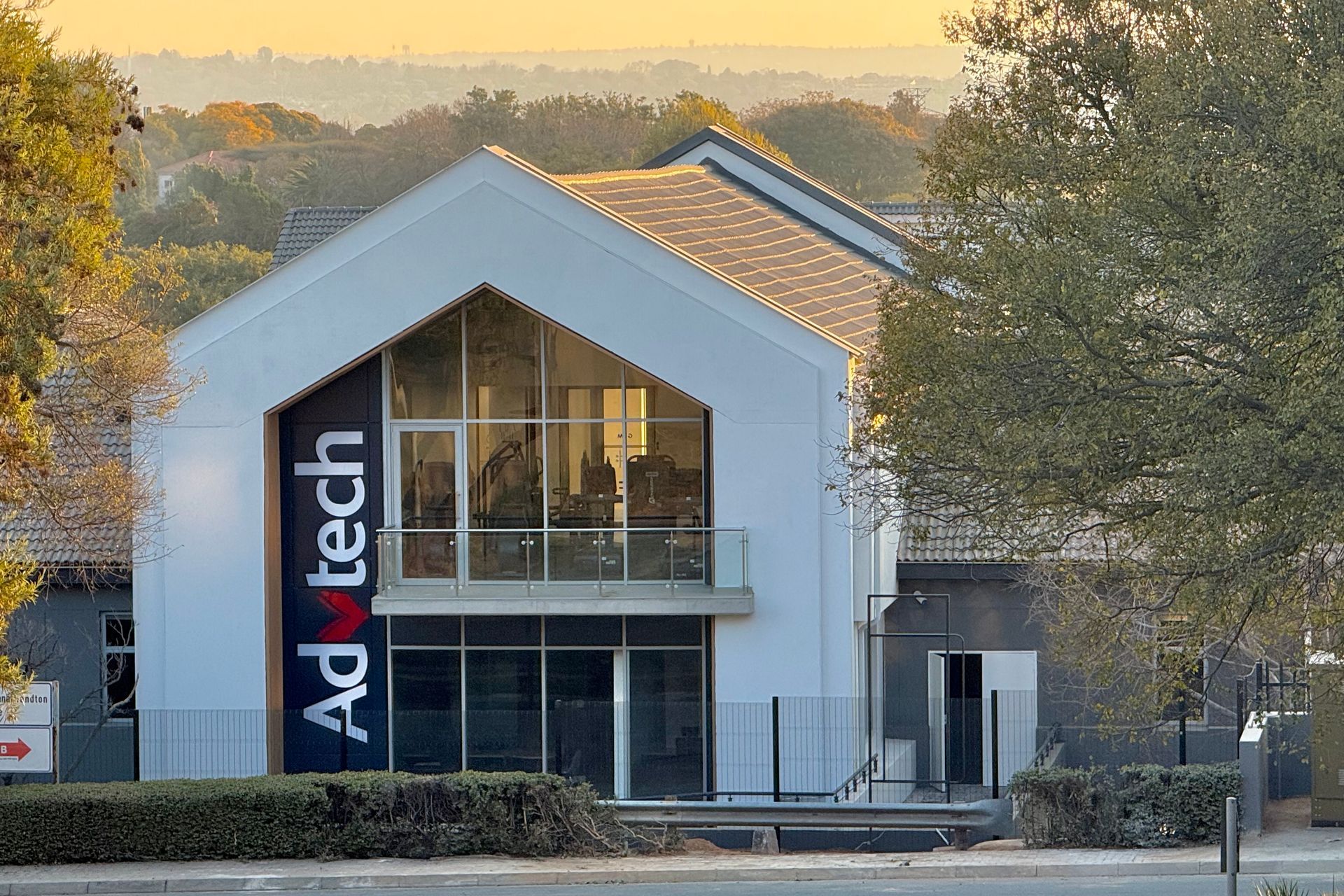
Group operating margin increases to 22% driven by operating leverage and improved debtor management Commenting on the six months ended 30 June 2026, Advtech CEO, Geoff Whyte said: “Healthy enrolment growth, moderate fee increases and a further improvement in debtor management contributed to Advtech delivering interim earnings growth of 16%. The ongoing consolidation of our brand portfolio is driving focus, operational efficiency and margin improvement across the business.” Group: Operational and Financial Performance Revenue up 8% to R5 060 million (2025: R4 683 million) Operating profit up 14% to R1 115 million (2025: R982 million) Operating margin up 1% to 22.0% (2025: 21.0%) Normalised earnings per share up by 16% to 130.8 cents (2025: 113.0 cents) Group revenue grew by 8% to R5 060 million for the six months ended 30 June 2026 (2025: R4 683 million), driven by a 13% increase in the education division. Operating profit increased by 14% to R1 115 million (2025: R982 million), with the education division’s operating profit increasing by 15%, supported by strong enrolment growth. Group operating margin improved to 22.0% (2025: 21.0%). Operating margin in the education division improved to 24.3% (2025: 23.8%) through the simplification of brand structures, the benefit of scale leverage and a continued focus on efficiencies. This more than offset the costs incurred to strengthen our brands through the introduction of additional global benchmarking measures, artificial intelligence tools to support personalised learning and enhanced student information systems. Normalised earnings for the period increased by 16% to R717 million (2025: R620 million) whilst normalised earnings per share increased by 16% to 130.8 cents (2025: 113.0 cents). A continued focus on collection processes has seen gross trade receivables increasing by only 5% compared to a revenue increase of 8%. Loss allowances increased to R505 million (2025: R488 million), representing 47% (2025: 48%) coverage of gross trade receivables. Credit losses decreased from R119 million in 2025 to R115 million in the period under review due to the improved debtors’ book performance. Cash generated by operating activities increased by 17% to R2 687 million (2025: R2 303 million). Capital expenditure of R403 million focused mainly on increasing capacity on existing sites to meet incremental demand, the completion of the new Emeris/Vega mega campuses in Sandton and Nelson Mandela Bay, the refurbishment of Rosebank International in Braamfontein and the relocation of the group support office to the old Emeris campus in Benmore. Dividend Announcement The board declared an 18% increase in the gross dividend to 53 cents (2025: 45 cents) per ordinary share in respect of the six months ended 30 June 2026. Divisions: Operational and Financial Performance Schools Schools South Africa Improved operating leverage driving strong financial performance Revenue increased by 8% to R1 858 million (2025: R1 722 million). Operating profit increased by 9% to R388 million (2025: R354 million) with operating margin improving to 20.9% (2025: 20.6%). As part of our ongoing programme to simplify and build scale in our brand structures, a number of previously acquired schools will, from January 2027, be aligned as follows: Southdowns College to Crawford International, Tygervalley College and Glenwood House School to Trinityhouse and Pecanwood College and Greenwood Bay College to Pinnacle. The old Vega Bordeaux site is also being redeveloped into an Abbotts High School, due to open in January 2027. Schools in the Rest of Africa Growing the group’s footprint through increased investment Revenue grew by 8% to R303 million (2025: R281 million) driven by strong enrolment growth and the inclusion of the Regis Runda acquisition in Nairobi. Operating profit increased by 11% to R91 million (2025: R83 million). Operating margin improved to 30.1% (2025: 29.4%). All the division’s schools are delivering exceptional local currency growth which has been offset to a degree by the strengthening Rand. The Regis Runda school was acquired in September 2025 and incorporated into the Makini brand. Investments to upgrade facilities and academic support systems are under way. We are investing to enhance our competitive position, focusing on improvements to ICT infrastructure and standardising access to AI-powered digital learning tools, such as Advlearn, to enhance the student experience and academic outcomes. Approval to launch the Cambridge International curriculum at this site has been received and implementation will begin in September 2026. Enabled by the successful negotiation of a new lease, the Makini Statehouse school in a prime Nairobi location is being redeveloped. Work to improve facilities and double student capacity will be completed by December 2026. Flipper International School in Addis Ababa has entered into a new lease agreement to relocate one of its schools to improved premises which will increase capacity by 450 students. Tertiary/University Accelerating demand for our well-established brands Revenue increased by 17% to R2 243 million (2025: R1 911 million) whilst operating profit increased by 19% to R592 million (2025: R496 million). Operating margin increased to 26.4% (2025: 25.9%) despite the significant investments made to strengthen student experience, elevate academic outcomes and to establish Rosebank International University College (RIUC) in Ghana. The division continues to perform well, driven by the consolidation of our brand portfolio, the relaunch of Rosebank College as Rosebank International (RI) and an ever-expanding range of programmes and qualifications. In line with the group’s strategy, the division is also achieving exceptional enrolment growth in its distance offering. Emeris, our groundbreaking new higher education brand that brought Varsity College, Vega, MSA and HSM together under a single entity, marked a significant milestone in February 2026 with the opening of a R420 million state-of-the-art mega-campus in Sandton, Johannesburg. The group is currently at the development stage of its new Emeris/Vega Durban campus. Construction is expected to commence in 2027, with phase one scheduled to open in 2029. The initial build will accommodate 8 000 students and include two rugby fields, an astroturf pitch and a purpose-built 500-bed student residence. A second phase, planned for completion in 2035, will expand capacity to 10 500 students, add a swimming pool for water polo and increase accommodation capacity by a further 500 beds. Student registrations at RIUC in Ghana commenced in January 2026 and enrolments are running ahead of expectation. Various projects are in progress to increase capacity at RI sites to accommodate strong student demand. These include the major redevelopment and expansion of the Braamfontein, Durban and Polokwane campuses. Rosebank International will also be opening a new campus in 2027 in KuGompo City (previously East London). Recognition of our Tertiary Brands as Universities Advtech welcomed the promulgation of the policy for the recognition of institutional types (university, university college, and higher education college) during 2025, which created a formal pathway for private higher education institutions to apply for university status. However, the regulations outlining the application process, timelines, and criteria are still being drafted by government and are awaited by Advtech. Once published, Rosebank International and Emeris will both apply for university status. Resolution of these issues will ultimately benefit our students who will finally be afforded the same status as their peers who earn equivalently accredited qualifications from public universities. Resourcing division Improved margin in difficult environments The Resourcing South Africa business continues to focus on efficiencies and diligent cost management, achieving profitability despite a reduction in revenue in a difficult operating environment. The unexpected closure of the United States Agency for International Development (USAID) in February 2025 continues to have a negative impact on revenue in our Rest of Africa (ROA) business. Despite the decline in revenue, ROA delivered a commendable performance with an increased operating margin. Prospects Advtech’s intent is to lead in every market segment in which we choose to operate and to become the employer of choice in the Resourcing and Education sectors. “Advtech is uniquely positioned to enrich people’s lives through being the leader in teaching and learning across the African continent. Our sound balance sheet, strong cash generation, growing scale and expertise in Africa and unrelenting focus on extending competitive advantage position us well to maintain our growth trajectory and invest with confidence in areas of opportunity,” concluded Whyte.

Johannesburg, South Africa – Advtech Limited (Advtech), Africa’s leading private education group, today announced a landmark multi-year partnership with Cricket South Africa (CSA). The agreement positions Advtech as the official sponsor of the National U13, U16 and U19 Boys and Girls Youth Weeks and Women’s Test Cricket, and as an associate partner of Men’s Test Cricket. The partnership will broaden participation and, through education, play an active role in developing South Africa’s future talent. When asked about the partnership, CSA Chief Executive Officer Pholetsi Moseki said, “We are excited about teaming up with Advtech. This partnership goes beyond what happens on the field. For CSA, it is important that our work has meaningful social impact, and partnering with Advtech strengthens the connection between cricket, education and the development of young people throughout our pathway. From introducing young boys and girls to the game through the KFC Mini-Cricket programme, our Youth Weeks and the professional game, education has an important role to play at every level. This partnership aims to unlock support for the system and help prepare cricketers for opportunities beyond their playing careers.” As Education Partner for the National Youth Weeks, Advtech will invest in the sport and its young players, reflecting the group’s broader commitment to shaping the lives and futures of young people across South Africa. In 2025, the U16 and U19 Youth Weeks involved 850 players across all 9 provinces and more than 350 matches. Building on CSA’s professionalisation of women’s cricket, Advtech also intends to strengthen the pathway to elite level for through the implementation of specialised girls’ cricket programmes at select schools. Commenting, Advtech Chief Executive Officer Geoff Whyte said: “Our partnership with Cricket South Africa extends across the sport, from grassroots to the elite Men’s and Women’s teams. It represents a powerful investment into South Africa’s most inclusive sporting code that will also significantly benefit our brands.”
Advtech Limited (Incorporated in the Republic of South Africa) (Registration number 1990/001119/06) JSE code: ADH ISIN: ZAE000031035 (“Advtech” or “the group”) VOLUNTARY TRADING STATEMENT FOR THE SIX MONTHS ENDED 30 JUNE 2026 The board hereby advises on its expectations of the financial results for the six months ended 30 June 2026. Basic normalised earnings per share (“NEPS”), Basic headline earnings per share (“HEPS”) and Basic earnings per share ("EPS") for the six months ended 30 June 2026 are expected to be between 13% and 18% higher than the comparative reporting period for the six months ended 30 June 2025 ("the comparative period") or between 127.4 and 133.3 cents per share as compared to NEPS of 113.0 cents, HEPS of 112.7 cents per share and EPS of 113.0 cents per share for the comparative period. The group reports NEPS as a way of excluding the effect of one-off transactions and corporate action costs from its results. The financial information on which this trading update is based on has not been reviewed or audited by the group’s external auditors. Advtech expects to release results for the six months ended 30 June 2026 on the JSE’s Stock Exchange News Service on or about Monday, 24 August 2026. 11 August 2026 Johannesburg Sponsor: Bridge Capital Advisors Proprietary Limited
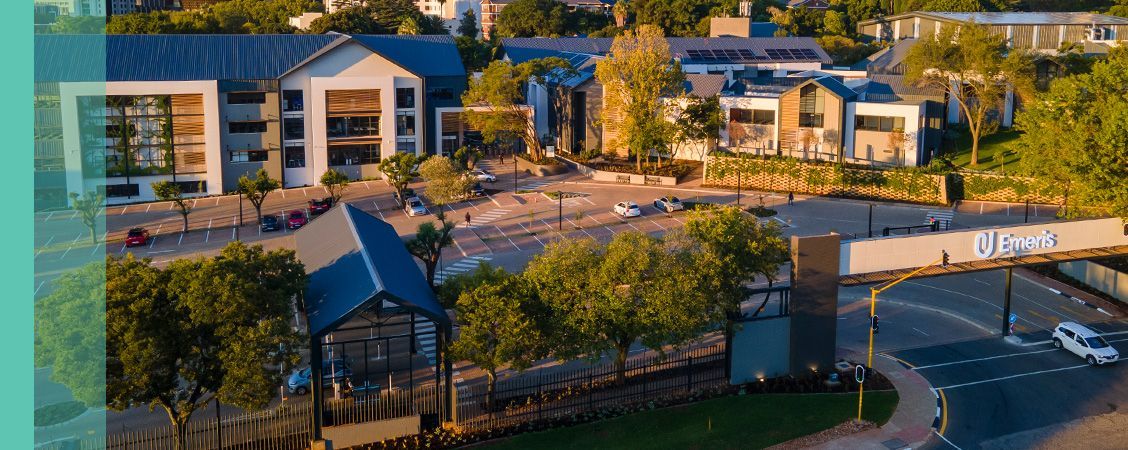
The Advtech (ADH) share price has gone up over three times in the last decade and it holds a firm place in the Crown Club . The company has invested in growth opportunities backed by secular trends over many years, building private schools and tertiary institutions with solid academic track records and strong graduate employability...

In South African education, where the pressure to improve outcomes remains intense amid diverse school contexts and varying resource levels, good intentions alone rarely move the needle on student achievement. From foundation phase literacy gaps to matric performance and university readiness, the system faces persistent challenges. What separates schools that deliver consistent progress from those that continue to struggle is a disciplined commitment to measurement and adjustment, an education expert says. “Effective school leadership begins with reliable metrics,” says Desiree Hugo, Executive: Advtech Schools Academics. “These include externally moderated assessments that provide objective benchmarks and classroom-based evaluations that capture day-to-day realities. Without them, it’s easy to confuse activity with progress.” Addressing more than 145 senior school leaders at Advtech’s recent Deputy Principals Conference , Hugo noted that when schools track performance across subjects and grades, patterns emerge: which cohorts are thriving, which domains show persistent weakness, and whether interventions are actually closing gaps. Bringing together Deputy Principals and Heads of Department from schools across South Africa, Botswana, Kenya and Ethiopia, the Advtech Deputies Conference provided an opportunity for academic leaders to exchange ideas, learn from one another and reflect on the challenges and opportunities facing schools today. “Growth diagnostics help pinpoint strengths and areas needing urgent attention, turning vague concerns into targeted action,” says Hugo. She says Advtech’s Stellar framework, combined with MAP assessments and Advlearn mastery tracking, demonstrates how structured metrics and digital tools can help leaders move from collecting data to driving measurable student improvement. CLOSING THE LOOP: FEEDBACK AND ACCOUNTABILITY Collecting data is only the starting point. The critical shift is from “I taught this” to “My students learned this”, says Hugo. “Strong leaders should ensure regular data meetings that focus on action rather than compliance. They ask tough questions: Are intervention plans per grade and subject actually being implemented? Who is accountable for tracking learner growth and parent engagement? Are teachers equipped to interpret reports and adjust instruction accordingly? “Root-cause analysis becomes indispensable here. Poor results in a particular grade or subject might stem from foundational gaps, inconsistent curriculum pacing, attendance issues, or uneven teacher capacity. Without structured reflection, from seeing the data, to thinking through causes, and wondering about solutions, schools risk applying generic fixes that fail to move outcomes.” THE IMPORTANCE OF CONTINUOUS COURSE CORRECTION Book checks, lesson plan reviews, assessment moderation, and error analysis after tests create the continuous feedback teachers need to improve. In addition to evaluating performance, these practices build a culture where everyone, from school leaders to classroom teachers, is oriented toward measurable student growth. “Ultimately, feedback loops empower teachers to seek evidence of their effect, reflect on misconceptions, and reteach with purpose rather than blame. Students benefit when they receive quality feedback and understand where they stand. Parents stay engaged when schools communicate transparently about progress and required support. And leaders fulfil their most important role: guiding instructional excellence so that every student has the best chance to succeed,” says Hugo. “Education faces no shortage of challenges whether these be resource constraints, staffing transitions, or shifting curricula. Yet schools that systematically measure impact and close the loop with deliberate action consistently outperform those that rely on hope or habit. The evidence is clear that sustained focus on metrics and feedback isn’t bureaucratic overhead, but rather the most powerful lever we have for student success.”
Advtech Limited (Incorporated in the Republic of South Africa) (Registration number 1990/001119/06) Share code: ADH ISIN: ZAE000031035 (“Advtech” or “the Company”) TRP121: NOTIFICATION OF DISPOSAL OF SECURITIES BY CLIENTS OF PUBLIC INVESTMENT CORPORATION SOC LIMITED (“PIC”) AND DIRECTORS RESPONSIBILITY STATEMENT – VOLUNTARY ANNOUNCEMENT In accordance with section 122(3)(b) of the Companies Act No. 71 of 2008, regulation 121(2)(b) of the Companies Act Regulations, 2011 and paragraph 6.54 of the JSE Limited Listings Requirements, shareholders are hereby advised that Advtech has received formal notification in the prescribed form that PIC’s clients have, in aggregate, disposed of an interest in the ordinary shares of the Company, such that the total interest in the ordinary shares of the Company held by PIC’s clients has decreased to 19.240% of the total issued ordinary shares of the Company. In terms of section 122(3)(a) of the Act, the Company has also filed notice with the Takeover Regulation Panel. The board of directors of Advtech accepts responsibility for the information contained in this announcement as it relates to the Company and confirms that, to the best of its knowledge and belief, such information relating to Advtech is true and that this announcement does not omit anything likely to affect the importance of such information. Johannesburg 17 July 2026 Sponsor: Bridge Capital Advisors Proprietary Limited

In many of South African schools, charity drives have long been the hallmark of community engagement, characterised by collecting canned food, gathering clothing, or distributing essential items to those in need. These acts of kindness remain deeply valuable, but a growing number of schools are broadening their approach, recognising that meaningful and sustainable engagement must go beyond ad hoc “giving”. “True transformation is about building relationships, nurturing partnerships and weaving service into everyday learning. We should be embracing a more holistic model of involvement: one that nurtures empathy, responsibility’ and sustainable action among students of all ages,” says Krystal Munian, Advtech Schools Specialist: College Phase, RDI, and WESSA. This transformative approach is being developed across the Advtech network of schools in South Africa, Botswana and Kenya, ensuring that community engagement is becoming a powerful learning experience that develops empathy, responsibility and active citizenship while creating meaningful partnerships with the communities the schools serve, she says. A Shift Towards Long-Term, Relationship-Based Engagement “Community engagement is most impactful when relationships are built over time. Instead of relying solely on once-off donation drives, many schools have established ongoing partnerships with community organisations, neighbouring schools, shelters and retirement villages, creating opportunities for students to learn alongside the communities they support,” says Munian. These partnerships take many forms. For instance, students have visited community centres where they help prepare meals for local families before spending time playing games and interacting with children. Others have supported children living in care by assisting with homework, singing songs and building friendships during regular visits. “Schools have also strengthened intergenerational relationships by partnering with retirement villages. During one outreach initiative, students served tea and coffee, distributed care packages prepared with the support of parents and spent time engaging residents in meaningful conversation. The experience demonstrated that while donations are appreciated, the greatest gift is often time, connection and companionship,” says Munian. These experiences allow students to move beyond simply giving, so that they begin to understand the value of listening, building trust and forming relationships that create lasting impact. Sustainability at the Heart of Service Environmental stewardship has also become an important extension of community engagement. “Through Advtech’s partnership with WESSA , all South African schools in the group, together with two international schools, participate in the internationally recognised Eco-Schools programme, encouraging schools to integrate sustainability into everyday learning,” says Munian. Students participate in initiatives such as collecting bottle caps and bread tags, creating eco-bricks, reducing electricity and water consumption and adopting animals. These projects show students how small actions can make a significant difference. Bottle caps and bread tags, for example, are collected and exchanged for wheelchairs, demonstrating how environmental responsibility can directly improve lives. Community partnerships also extend to conservation and environmental action. Students have worked alongside partners to remove litter from the Braamfonteinspruit River, contributing to the restoration of one of Johannesburg's important urban waterways. Others have adopted a rhino calf through the Rhino Orphanage, raising funds, visiting the orphanage to learn about wildlife rehabilitation and developing a deeper appreciation for protecting South Africa's natural heritage. Each school is supported by a dedicated Eco-Schools champion who guides these initiatives and helps embed sustainability throughout the school community. Curriculum and Sustainability “It is crucial that community engagement is not treated as an extracurricular activity, but as part of a broader educational experience. Lessons should encourage students to understand the social and environmental issues behind the projects they support, ensuring that service is accompanied by learning and reflection,” Munian says. One example from an Advtech School saw students explore traditional food practices through their language curriculum. They researched the nutritional value of pulses, investigated eating habits across South Africa, developed recipes and presented their findings. The project deepened their understanding of cultural diversity while highlighting food security and the different ways communities live and sustain themselves. “Before participating in outreach initiatives, students also explore themes such as dignity, social responsibility, food security and environmental sustainability in the classroom. Where appropriate, they are involved in delivering donations and visiting partner organisations, allowing them to witness the impact of their contributions firsthand,” says Munian. By connecting classroom learning with practical experiences, schools help students understand that meaningful community engagement is not defined by what is collected or donated, but by the relationships that are built, the lessons that are learned and the positive change created together. “Ultimately, while collecting and donating essential items remains an important expression of care, it is the partnerships formed, the experiences shared and the understanding developed that leave the greatest impact. Through integrating community engagement into everyday learning, schools are equipping students to become compassionate, socially responsible citizens who recognise that lasting change is achieved by working alongside others.”

Eleven conversations to move beyond rhetoric to action-based agenda
Advtech Limited (Incorporated in the Republic of South Africa) (Registration number 1990/001119/06) Share code: ADH ISIN: ZAE000031035 (“Advtech” or “the Company”) TRP121: NOTIFICATION OF ACQUISITION OF SECURITIES BY CLIENTS OF PUBLIC INVESTMENT CORPORATION SOC LIMITED (“PIC”) AND DIRECTORS’ RESPONSIBILITY STATEMENT In accordance with section 122(3)(b) of the Companies Act No. 71 of 2008, regulation 121(2)(b) of the Companies Act Regulations, 2011 and paragraph 6.54 of the JSE Limited Listings Requirements, shareholders are hereby advised that Advtech has received formal notification in the prescribed form that the clients of PIC have, in aggregate, acquired interest in the ordinary shares of the Company, such that the total interest in the ordinary shares of the Company held by PIC’s clients has increased to 20.087% of the total issued ordinary shares of the Company. As required in terms of section 122(3)(a) of the Act, the Company has filed the required notice with the Takeover Regulation Panel. The board of directors of Advtech accepts responsibility for the information contained in this announcement as it relates to the Company and confirms that, to the best of its knowledge and belief, such information relating to Advtech is true and that this announcement does not omit anything likely to affect the importance of such information. Johannesburg 30 June 2026 Sponsor: Bridge Capital Advisors Proprietary Limited