Changing course: Options for dealing with unexpected matric results

Following the release of the 2024 Matric results this week, countless students are in a position where they can – or are forced to – reconsider their plans for 2025. For those who did better than expected, new doors will have opened. For others, their initial study plans may need to be reviewed due to their marks not fulfilling the requirements of their chosen qualification. Regardless of an individual’s position, it’s important to know how to move forward, an education expert says.


“In the wake of receiving their results, it is important for all Matrics from the Class of 2024 to pause and consider the way forward. Even if your results don’t impact your initial plans, it is still advisable to make sure you know you are on the right path,” says Peter Kriel, General Manager at The Independent Institute of Education, SA’s leading private higher education provider. 


SCENARIO 1: YOU DID BETTER THAN EXPECTED

Kriel says the first thing to do if you did better than expected is to enjoy the moment and celebrate your success.


“Take pride in your achievement and recognise the hard work and dedication you put in. In preparation for future successes it is also important to reflect on your methods: Think about what strategies worked for you. Did you follow a study schedule? Did you use specific study techniques? Understanding what contributed to your success can help you in future endeavours,” he says.


Then consider your options and plan your next steps. If you have a better than expected endorsement on the National Senior Certificate, you may want to reconsider your initial plans.


“If you applied to a higher education institution to study in 2025, contact them immediately and find out if there is space available in a programme that you would rather follow but did not previously qualify for.


“Alternatively, explore other options to check for available space. In South Africa, public universities and private higher education providers must all register as higher education providers and the qualifications they offer are all subject to a unitary form of accreditation. This means that there may be a world of options now open to you, which you may not even have been aware of.”


SCENARIO 2: YOU DIDN’T DO AS WELL AS EXPECTED

Kriel says it is very important to stay positive and not panic. Performing below par is a temporary hurdle, not the end of the road.


“It’s natural to feel disappointed, but remember that one set of results does not define your future. Reflect on what happened and understand where things went wrong. Was it a lack of preparation, anxiety, or difficulty with certain topics? Identifying the problem is the first step to improvement going forward,” he says.


If your poorer performance didn’t impact your National Senior Certificate endorsement you are probably also set to go. Your reflection on what went wrong is now more important than ever to ensure that you don’t make the same mistakes going forward.


However, if you applied to study next year and you now no longer qualify to follow this route, you have to act quickly to plan how you will get to where you planned to be in the first place.


“Remember, all doors are not closed – you may just need to follow a different route. One really good option is to enrol for a Higher Certificate at a reputable registered and accredited higher education institution. The advantage of doing this is that once you have successfully completed the Higher Certificate, you will be able to continue with degree studies in your chosen discipline.”


It is important to keep in mind that both successes and failures are part of the learning process, Kriel says.


“Use them as opportunities to build resilient adaptability and develop a growth mindset by believing in your ability to grow and improve. A growth mindset can turn challenges into opportunities for learning and development.


“Your final school exam results are an important milestone, but they are just one part of your academic journey. Whether you did better or worse than expected, there are always steps you can take to continue growing and improving. Celebrate your achievements, learn from your experiences, and stay focused on your future goals. Remember, with determination and the right mindset, you can overcome any challenge and achieve your dreams.”


Advtech Updates

By Tamara Thomas June 12, 2026
Advtech Limited (Incorporated in the Republic of South Africa) (Registration number 1990/001119/06) Share code: ADH ISIN: ZAE000031035 (“Advtech” or “the Company”) DEALINGS IN SECURITIES BY A PRESCRIBED OFFICER OF THE COMPANY In compliance with paragraphs 6.77 to 6.91 of the JSE Limited Listings Requirements the following information is disclosed in respect of dealings in Advtech securities by a prescribed officer of the Company. 
By Tamara Thomas June 9, 2026
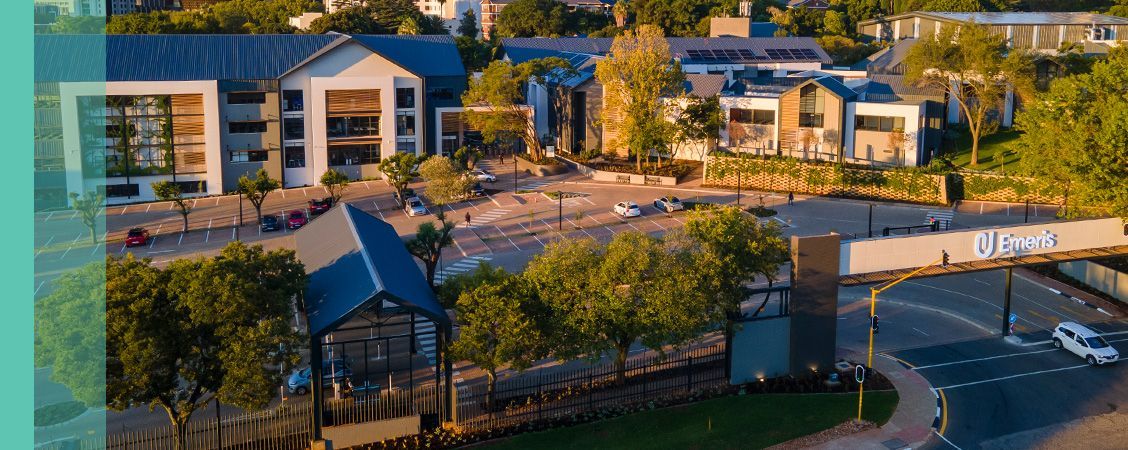
Deputy Minister for Higher Education and Training, Dr Mimmy Gondwe, kicked off sector-wide engagements by meeting Advtech’s senior leadership at Emeris’ Sandton campus on Monday, 8 June 2026. This follows her recent address at Advtech’s Rosebank International brand launch. The aim of these engagements is to recognise and collaborate with private institutions that positively contribute to the Post-School Education and Training sector. Advtech’s senior leadership discussed opportunities for public-private partnerships, including leveraging the agility of the private sector to widen access for students to quality education. During the visit, Dr Gondwe spent time with Emeris students and toured the campus’ world-class facilities, including its state-of-the-art sports centre. Said Dr Gondwe prior to the visit, “The conversation can no longer be about whether private higher education institutions have a role to play; that question has long been settled; the focus now is on collaborating more effectively and responsibly to ensure that higher education supports national development and inclusive economic growth.” “Advtech welcomes our positive recent engagements with Dr Gondwe. We look forward to collaborating with her department going forward and appreciate her commitment to finalising the process that will enable Emeris and Rosebank International to finally achieve university status,” said Geoff Whyte, Group CEO of Advtech.
By Tamara Thomas June 3, 2026
Play should sit naturally in early childhood education, as it reflects how young children come to know themselves, others and the world. Yet too often, play is the very space that requires the most protection. This tension usually arises from a culture that prioritises early academic achievement and holds the belief that accelerating formal learning guarantees future success. When children are rushed or pressured into formalised academic outcomes too early, short-term gains may be visible for some, but the long-term cost can be significant, an education expert says. “Play is not separate from learning, it is the medium through which learning becomes possible,” says Lynda Eagle, Advtech Schools Specialist: Early Years Phase. “Early learning that prioritises performance over understanding risks weakening curiosity, motivation and wellbeing. Strong foundations are built not through acceleration, but through experiences that nurture thinking, communication, collaboration, and joy - conditions that sustain lifelong learning.” Eagle explains that children engage with play in ways that reflect their own pace, interests and needs. “It provides space for difference and diversity while offering opportunities for connection and shared experience. Importantly, play supports emotional regulation and prepares children for future learning by strengthening the foundations required for inquiry, reflection and participation in real-world contexts.” Play and responsiveness are often described as abstract concepts, yet they require intentional commitment from both educators and families, says Eagle. “Responsiveness asks adults to understand the value of play and to reflect on their role within it: how they observe, when they intervene, how they extend thinking and how they remain present without directing or interfering. By engaging in careful observation and thoughtful support, adults come to know children more deeply, including learning about their interests, strengths and emerging identities. “It also plays a big role in building key life skills - things like thinking deeply or critically, solving problems, working with others, communicating effectively and self-management. When children play, they’re constantly exploring new ideas, testing their theories, inventing solutions and figuring out how the world works. Along the way, they learn to take manageable risks and handle challenges. And, very importantly, to stick with things even when they’re difficult, which gradually builds their confidence and a real mindset for growth.” PLAY AND RESPONSIVENESS – IMPORTANCE OF PARTNERSHIPS Partnerships between families and educators are central to this work, Eagle says. “Together, they can create learning experiences that balance freedom and structure, offering both flexibility and clear boundaries. This balance provides children with emotional safety while teaching respect for themselves, for others and for the environment. Such stability supports the development of empathy, resilience and perseverance.”  Within these conditions, children form relationships, make connections, and gradually become independent learners. They develop conceptual understanding and learn to reason, transfer knowledge, and apply ideas in new contexts, moving from concrete experience toward more abstract thinking. “Any tension between our aspirations for children and our understanding of play and responsiveness deserves careful reflection,” Eagle warns. “When adults deepen their understanding of why play matters and how responsiveness supports learning, they are better positioned to guide children with intention and trust. Ultimately, early learning is not only about what children know, but about how they think, how they relate to others, and how they come to see themselves in the world, a world full of possibility.”
By Tamara Thomas May 28, 2026
Advtech Limited (Incorporated in the Republic of South Africa) (Registration number 1990/001119/06) Share code: ADH ISIN: ZAE000031035 (“Advtech” or “the Company”) DEALINGS IN SECURITIES BY PRESCRIBED OFFICERS, DIRECTOR OF A MAJOR SUBSIDIARY AND THE COMPANY SECRETARY OF THE COMPANY In compliance with paragraphs 6.77 to 6.91 of the JSE Limited Listings Requirements the following information is disclosed in respect of dealings in Advtech securities by prescribed officers, director of a major subsidiary and company secretary of the Company.
By Tamara Thomas May 27, 2026
ADvTECH Limited (Incorporated in the Republic of South Africa) (Registration number 1990/001119/06) Share code: ADH ISIN: ZAE000031035 (“ADvTECH” or “the Company”) RESULTS OF THE ANNUAL GENERAL MEETING In terms of section 6.63 of the JSE Listings Requirements, shareholders are hereby advised that at the annual general meeting (“AGM”) of shareholders of the Company held today, Wednesday 27 May 2026 all the proposed ordinary and special resolutions, as set out in the notice of annual general meeting contained in the Integrated Annual Report, were approved by the requisite majority of shareholders present or represented by proxy. Details of the results of voting at the annual general meeting are as follows:
By Tamara Thomas May 27, 2026
Dr Wendy Mahoney has made history as the first PhD graduate of The Vega School at Emeris and as the first recipient of the school’s Black Pencil Award for Excellence. She was recently conferred the qualification IIE Doctor of Philosophy in Brand Leadership at The Vega School at Emeris Umhlanga’s Class of 2025 graduation ceremony. Reflecting on receiving her PhD after a three year part-time journey, Dr Mahoney described the moment as deeply emotional and meaningful. “This is the most incredible feeling. I am deeply honoured, blessed and grateful to every single person who cheered me on,” she said. “It was such a profound moment for me because The Vega School at Emeris has been such an intricate part of my personal journey. What made the occasion even more meaningful was the immense pride I felt in the room for this achievement. It was not just my achievement - it was our achievement”. Dr Carla Enslin (Dean of the Postgraduate & Research Centre at Emeris) said the launch of the IIE Doctor of Philosophy in Brand Leadership in 2021 was a significant moment for The Independent Institute of Education (IIE) and for The Vega School at Emeris. “It’s a first of its kind qualification and breaks new ground both locally and internationally,” she said. “The PhD purposefully produces original frameworks, original models, creative insights to innovative and meaningful brand building. We expect our PhD graduates to be the individuals advancing the values-based leadership that grows an organisational culture and the practises that transform communities, businesses, environments,” continued Dr Enslin.
By Tamara Thomas May 27, 2026
Advtech Limited (Incorporated in the Republic of South Africa) (Registration number 1990/001119/06) Share code: ADH ISIN: ZAE000031035 (“Advtech”) DEALINGS IN SECURITIES BY PRESCRIBED OFFICERS, A DIRECTOR OF A MAJOR SUBSIDIARY, AND COMPANY SECRETARY: SHARE VESTING In compliance with paragraphs 6.77 to 6.91 of the JSE Limited Listings Requirements, the following transactions relating to prescribed officers, director of a major subsidiary and company secretary dealings are hereby disclosed, in terms of the provisions of the Advtech Management Share Incentive Scheme (MSI), regarding performance and retention shares that have vested after 3 years.
By Tamara Thomas May 25, 2026
Access to higher education remains one of South Africa’s most powerful tools for social mobility, economic growth, and national development. For many young people - especially first-generation students - it represents the chance to break cycles of poverty and build better futures for themselves and their families. While it is estimated that between 30-40% of qualifying students can’t access higher education for various reasons annually, simply opening the doors of higher learning to more young people is not enough, an education expert says. Peter Kriel, Executive: Operations at Advtech and The IIE ’s Academic Centre of Excellence, says access and quality must go hand in hand: “True access means creating opportunities for students to enter higher education, thrive within it, graduate with the skills and confidence needed to build meaningful careers.” He says there are five practical ways for South African higher education institutions to expand access while supporting student success: 1) Develop multiple entry pathways Traditional admission routes exclude many talented students whose school backgrounds may not fully reflect their potential. Institutions can widen participation by offering foundation programmes including higher certificates, extended curriculum streams, bridging courses and alternative admission pathways. These flexible entry points acknowledge that academic readiness is not equally available across all communities. By providing targeted academic preparation, institutions can identify and nurture talent that might otherwise be left behind, without lowering standards. “Widening participation is not about lowering academic standards, but rather about creating appropriate pathways that enable students to reach those standards,” says Kriel. 2) Strengthen transition support programmes The jump from school to higher education is often daunting. Students face new academic demands, greater independence, and the need for advanced analytical skills. Strong orientation programmes, first-year experience initiatives and structured academic skills workshops help ease this transition. Proactive support in the critical first year significantly improves retention and builds the foundation for long-term success, notes Kriel. 3) Invest in academic development initiatives Ongoing support is essential. Tutoring services, writing centres, peer-assisted learning programmes, dedicated academic development resources help students bridge knowledge gaps and build confidence. These initiatives are particularly valuable for students navigating higher education for the first time in their families, turning potential struggles into opportunities for growth. 4) Use data to identify at-risk students early Institutions should harness student success analytics to spot challenges before they become crises. Early warning systems allow for timely interventions - whether through additional tutoring, counselling, or personalised support. “Proactive data-driven approaches dramatically improve completion rates and ensure that expanded access translates into actual graduate outcomes,” says Kriel. 5) Create inclusive and adaptive learning environments Students succeed best when they feel they belong. Inclusive campuses that respect diversity, foster connection, and value different backgrounds help students engage fully with their studies. AI and adaptive technologies further enhance this by enabling personalised learning pathways - adjusting content, pace, support in real time to match each student’s unique needs, learning style and progress. Feeling respected and supported by lecturers and peers, ensures increased persistence and chances for success. BROADER IMPACT AND SHARED RESPONSIBILITY When students complete their qualifications, the benefits multiply, says Kriel. “Graduates access better employment, develop critical thinking and professional skills, and often become role models who inspire the next generation. This creates a powerful ripple effect: stronger families, more skilled communities and broader economic growth.” Students also have a key role to play.  Actively using available support services, building good study habits, managing time effectively, engaging with lecturers, staying curious can make a significant difference, he advises. At the same time, institutions must recognise that many students enter higher education while dealing with financial pressure, family responsibilities, or personal challenges. Support systems therefore need to be visible, accessible and proactive - reaching students before they have to ask for help. “Expanding access to quality higher education is one of South Africa’s greatest opportunities for meaningful change. This means not simply increasing enrolment numbers, but an active strategy to unlock human potential, enabling individuals to contribute meaningfully to their communities and the broader economy.”
By Tamara Thomas May 15, 2026
New name and visual identity prepare the way for university status and further rapid growth
By Tamara Thomas May 6, 2026
The body content of your post goes here. To edit this text, click on it and delete this default text and start typing your own or paste your own from a different source. One of the most important expectations placed on higher education today is that it prepares students for successful careers. While intellectual development remains central to the mission of universities, students increasingly seek - rightly so - educational experiences that provide clear pathways into professional life. Career-focused education, therefore, plays a vital role in connecting academic learning with the practical realities of the workplace. Peter Kriel, Executive: Operations at The Independent Institute of Education , says for this reason, it is incumbent on universities to actively strengthen the link between learning and employability. “Students enter higher education with the hope that their qualifications will enable them to build meaningful careers,” he explains. “Institutions therefore have a responsibility to ensure that academic programmes provide both theoretical depth and opportunities for practical application.” Career-focused education does not diminish the intellectual value of higher education. Rather, it enhances it by ensuring that academic knowledge can be applied to real-world contexts. “In today’s economy, employers seek graduates who can demonstrate both subject knowledge and practical capabilities. Skills such as teamwork, communication, critical thinking, and problem-solving are highly valued across industries. “Universities must help students develop these competencies by integrating practical life skills opportunities into academic programmes. Work-integrated learning, internships, project-based learning, and industry collaborations also provide students with valuable opportunities to apply what they have learned in real-world settings.” These experiences help students build confidence while also developing the professional skills that employers seek, says Kriel. Institutions seeking to strengthen career-focused education can consider the following approaches. 5 WAYS UNIVERSITIES CAN STRENGTHEN THE FOCUS ON CAREER-READINESS  1. Expand work-integrated learning opportunities Internships, practical placements, and industry projects allow students to gain direct exposure to professional environments. This means that students graduate with practical experience that enhances employability. 2. Strengthen career guidance and development services Career counselling, CV workshops, and interview preparation help students transition successfully into the workplace. Students, therefore, gain clarity about career pathways and develop stronger job-search skills. 3. Develop strong employer partnerships Collaboration with industry partners can provide insights into emerging skills requirements and new employment opportunities. Institutions must strengthen their alignment with labour market needs. 4. Embed professional skills - including AI skills - within curricula Communication, teamwork, leadership, and problem-solving skills should be integrated into academic programmes rather than treated as separate activities. This would allow graduates to become well-rounded professionals capable of contributing effectively in the workplace. In addition, universities should explicitly teach students how to responsibly and effectively use AI tools, given the rapidly changing nature of the workplace. This includes developing critical AI literacy skills such as prompt engineering, ethical AI use, evaluating AI-generated outputs, and integrating AI to augment human capabilities rather than replace them. 5. Encourage entrepreneurship and innovation Not all graduates will follow traditional employment pathways. Institutions that promote entrepreneurial thinking help students identify opportunities to create their own ventures. It is also a fact that entrepreneurship contributes to job creation and economic development. Given all this, it is clear that career-focused education delivers benefits that extend beyond individual graduates. For students , it increases confidence and preparedness as they transition from study to employment. Exposure to professional environments helps students better understand industry expectations and workplace dynamics. For institutions , strong employability outcomes enhance reputation and strengthen relationships with industry partners. For society , career-focused education contributes to economic growth by ensuring that graduates possess the skills required to support innovation and productivity. “Higher education institutions have a unique opportunity to shape the future workforce by designing programmes that combine academic excellence with practical relevance. Institutions that embrace career-focused education ultimately strengthen their contribution to society,” says Kriel. “When higher education institutions actively connect learning with professional opportunity, they empower graduates to build careers that are both personally fulfilling and economically productive. As economies evolve and industries continue to transform, the ability of higher education to bridge the gap between learning and the workplace is essential.”